

📍 I decided to add a Radiohead video, since I was listening to their basement performance while making this post.
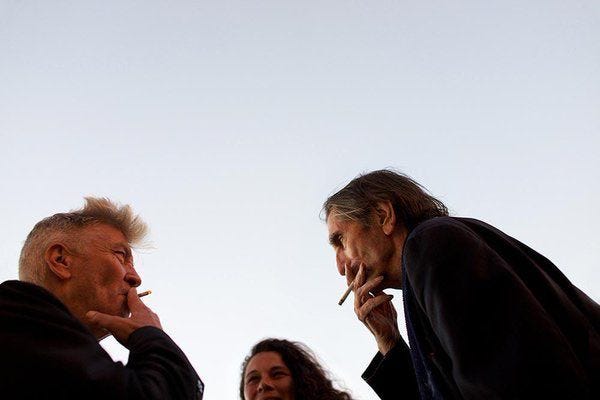
There was a time when the public intellectual stood slightly apart from society. Not above it, not outside it, but at an angle. Just far enough to see clearly, and close enough to be heard. Their work was to disturb comfort, to illuminate contradiction, to insist on thinking where others had settled for belief.
That voice has not been silenced by force. It has been absorbed, priced, and made palatable. The market did not destroy the intellectual. It hired them.
In the current economy of attention, thought is expected to arrive quickly, speak simply, and disappear quietly. To think slowly, to risk complexity, is to risk irrelevance. Platforms do not reward patience. Algorithms do not honour doubt. And so the thinker adapts, flattening nuance into clarity, folding questions into statements, speaking not from reflection, but for reach.
What once moved in paragraphs now arrives in posts. Philosophy is styled as posture. Insight is reduced to aesthetic. The marketplace no longer fears the intellectual. It has learned to monetize them. Even rebellion, if properly branded, sells.
The public has changed as well. It has ceased to be a shared space of reflection and has become a mosaic of isolated feeds, each tailored, each mirrored. The intellectual no longer addresses a commons. They upload into fragmentation. Thought circulates, yes, but not to gather us. It drifts, like noise, without arrival.
Critique survives, but only in its image. Real critique, the kind that unsettles, is too slow, too uncertain, too unprofitable. What remains is its simulation, polished, reactive, and convenient. The difficult work of wrestling with meaning has been replaced by performance. Ideas are not meant to linger, but to trend.
And what we consume begins to consume us. Our imagination bends to fit the form of the feed. We begin to expect truth to be brief, and complexity to be clear. The intellectual no longer walks beside the public through uncertain ground. Instead, they entertain it, quickly, cleanly, and without discomfort.
Perhaps the only radical gesture left is refusal. Not of thought, but of its market. Not of speech, but of performance. To return to silence, not as retreat, but as resistance. To choose slowness. To rebuild meaning, even when no one is watching. Especially then.
In a world that demands everything be visible, the invisible work of thinking may be the most subversive thing left.

